How to Check a CS2 Skin's Float Before You Buy
11 August 2026
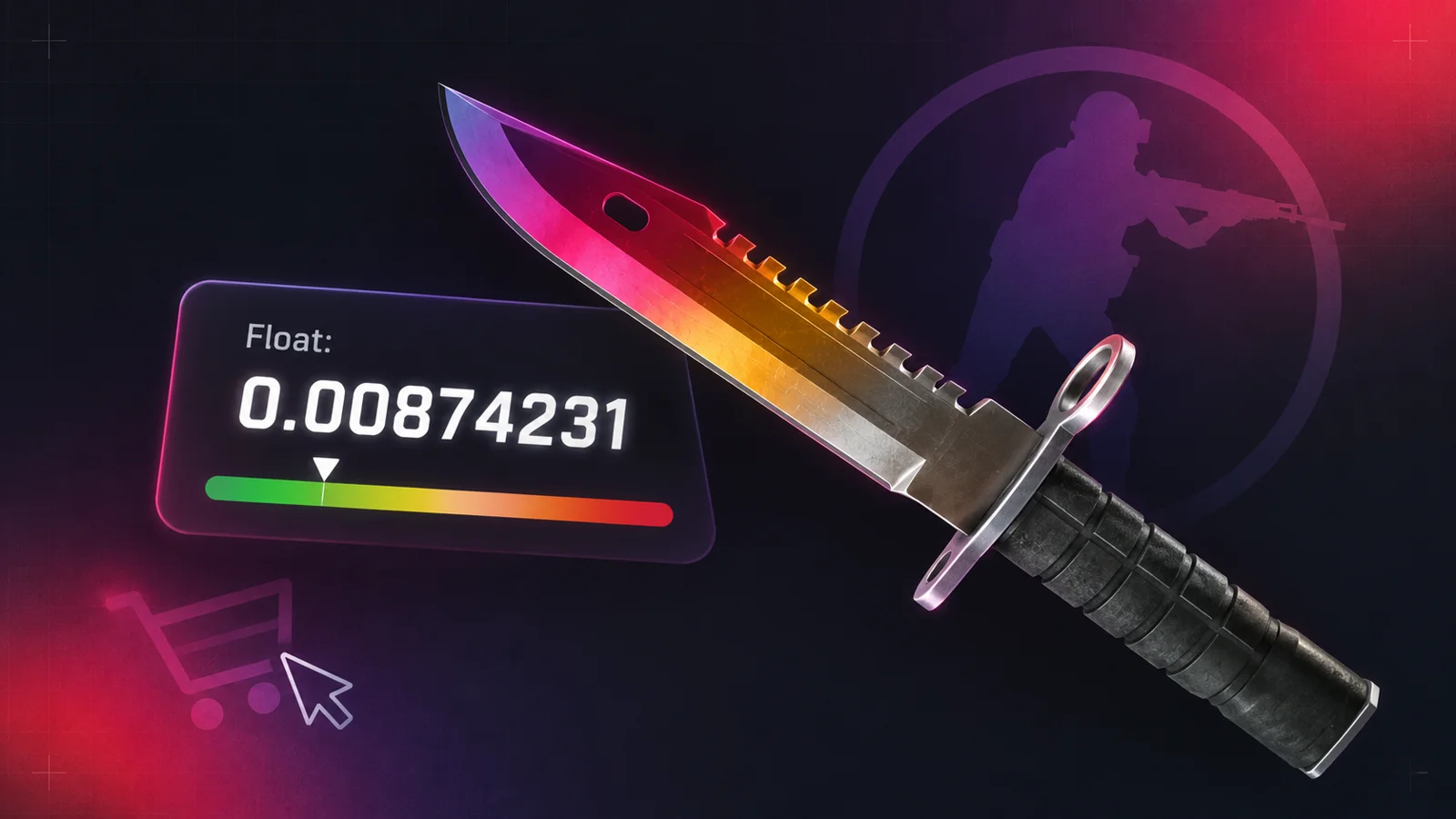
Two listings for the same skin, in the same condition, can differ in price by a lot. Most of the time the reason is the float value. Here is what it is, where to find it, and when it's actually worth paying attention to.
What the float value is
Every CS2 skin has a hidden number between 0 and 1 that describes how worn it looks. Lower means cleaner. That number decides which condition the skin gets:
Factory New (0.00 – 0.07)
Minimal Wear (0.07 – 0.15)
Field-Tested (0.15 – 0.38)
Well-Worn (0.38 – 0.45)
Battle-Scarred (0.45 – 1.00)
The float is assigned when the item is created and never changes. Playing with the skin, trading it, or storing it in a casket does nothing to it.
One thing that confuses new buyers: not every skin can roll the full 0–1 range. The AWP Asiimov, for example, starts at 0.18, so Factory New and Minimal Wear versions simply do not exist. Other skins cap out well below 1.00. If a condition tier is missing from a skin's listings everywhere you look, that's usually why.
Where to find the float
There are three practical ways:
On the listing itself. Most trading sites show the exact float and the pattern index next to each item. If a site doesn't show it, you are buying blind.
In game. Open the item in your inventory and use "Inspect". CS2 shows the wear value directly.
Through the inspect link. Every listed item has one. Paste it into a float checker site and you get the exact value plus the pattern seed.
If you are buying from a marketplace, comparing the float against the price of nearby listings takes about thirty seconds and is the single easiest way to avoid overpaying.
When float actually matters
Not always. It depends on the skin.
It matters a lot when the wear is visible. Skins with painted metal that scratches through - the AK-47 Case Hardened, most knives, anything with a glossy finish - change noticeably as the float climbs. A 0.16 Field-Tested and a 0.37 Field-Tested can look like different skins.
It matters little when the design hides wear. Heavily patterned or dark skins often look nearly the same across two or three tiers. On those, buying the top of Field-Tested instead of the bottom of Minimal Wear saves you money for almost no visual difference. That's usually the best value in the whole market.
Extreme floats carry a collector premium. A Factory New under 0.001, or a Battle-Scarred close to the maximum possible for that skin, sells for far more than the same item at a normal float. This is a collector's market, not a cosmetic one - most players will never notice the difference in game. If you are buying to use the skin, there's no reason to pay for it. If you are buying to resell later, understand that these are slower to sell because the pool of buyers is smaller.
It matters for trade-ups. Trade-up contract outcomes depend on the average float of the inputs, so low-float inputs are worth more to people doing contracts than their looks alone would suggest.
Float is not the same as pattern
They get mixed up constantly. Float is wear. Pattern index (or seed) decides how the texture is laid out on the weapon - which part of the pattern you get.
For most skins the pattern is irrelevant. For a handful it's the main thing driving the price: Case Hardened blues, Marble Fade fire and ice, Doppler phases, Fade percentages. On those items a mediocre float with a great pattern beats a perfect float with a bad one, by a wide margin.
If you're buying one of those skins, check the pattern first and the float second.
A quick routine before you buy:
1. Look at what the float actually is, not just the condition label.
2. Compare it to a few other listings of the same skin and condition. Are you at the clean end of the tier or the worn end, and does the price reflect that?
3. Open the inspect link and look at the skin. Screenshots on a listing don't always show the item you're buying.
4. Check whether this particular skin is one where pattern matters.
5. Decide what you're buying it for. To play with, cheap and mid-float is fine. To hold or resell, the details start to count.
Most overpaying happens because someone saw "Factory New" and stopped reading. Thirty seconds of checking usually saves more than that.